


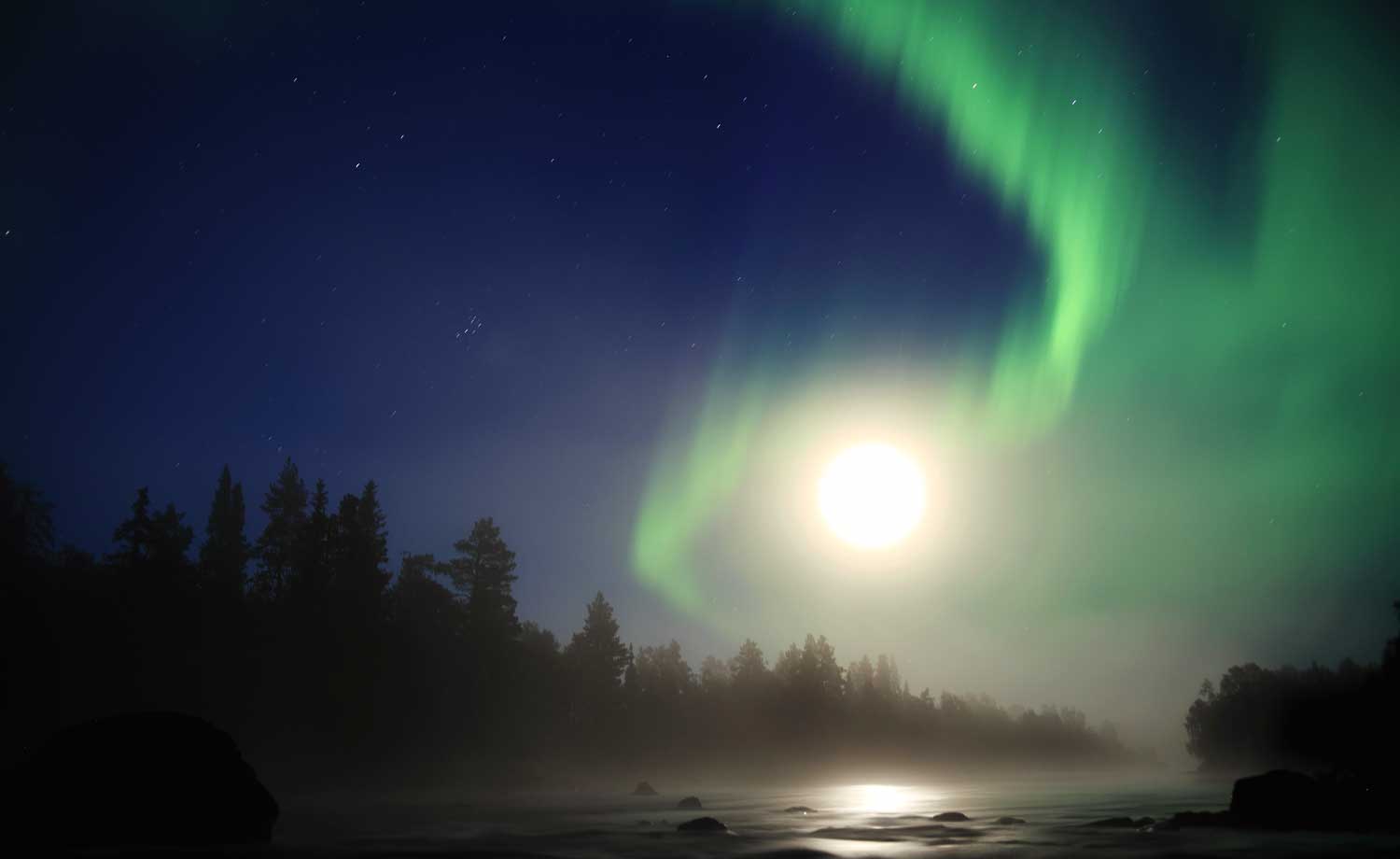
Journey to Northern Lights Trip from Stockholm
The Swedish Lapland is one of the best places to see Aurora Borealis. A northern lights trip from Stockholm is one of the most rewarding travel experiences in Scandinavia. While many visitors fly directly north, taking the scenic route through Northern Sweden’s countryside offers something even more memorable: charming farm stays, peaceful rural landscapes, and a gradual journey into the Arctic.
This road trip guide takes you from Stockholm to Umeå, Luleå, Jokkmokk, and finally Kiruna. It is a classic northbound route into Swedish Lapland. You might even see the northern lights along the way, so you wouldn’t have to travel all the way to Kiruna.
Starting point: Stockholm
While it is possible (though rare) to see faint auroras this far south, your best chances begin several hundred kilometers north. The beauty of driving is that you transition slowly from urban archipelago landscapes to deep forests and Arctic surroundings, making the journey part of the trip.
Winter (December–March) offers the highest probability of seeing the northern lights, thanks to long, dark nights and clearer skies in the north.
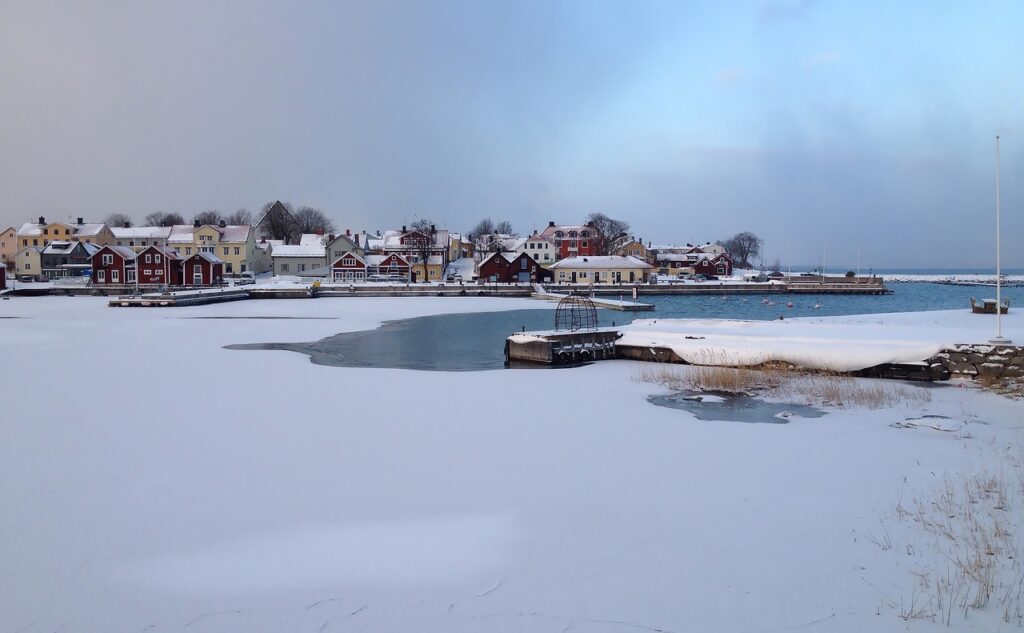
Stop 1: Stockholm to Umeå (Approx. 6–7 Hours)
Your first major stop is Umeå, past Gävle, often called the gateway to northern Sweden. The drive follows the E4 highway along the Baltic coast, passing forests, frozen lakes, and traditional Falu red cottages.
This is also the first place where there is a high chance you would see auroras. Depending on the time you arrive here and how much daylight left, you might consider settling in for the night. Instead of booking a city hotel, choose a countryside farm stay. Many rural properties offer:
• Private wood-fired saunas
• Outdoor hot tubs (badtunna)
• Homemade breakfasts with local produce
• Minimal light pollution for aurora spotting
Farm stays provide your first real opportunity to catch the northern lights if solar activity is strong, and you will enjoy much darker skies than in Stockholm.
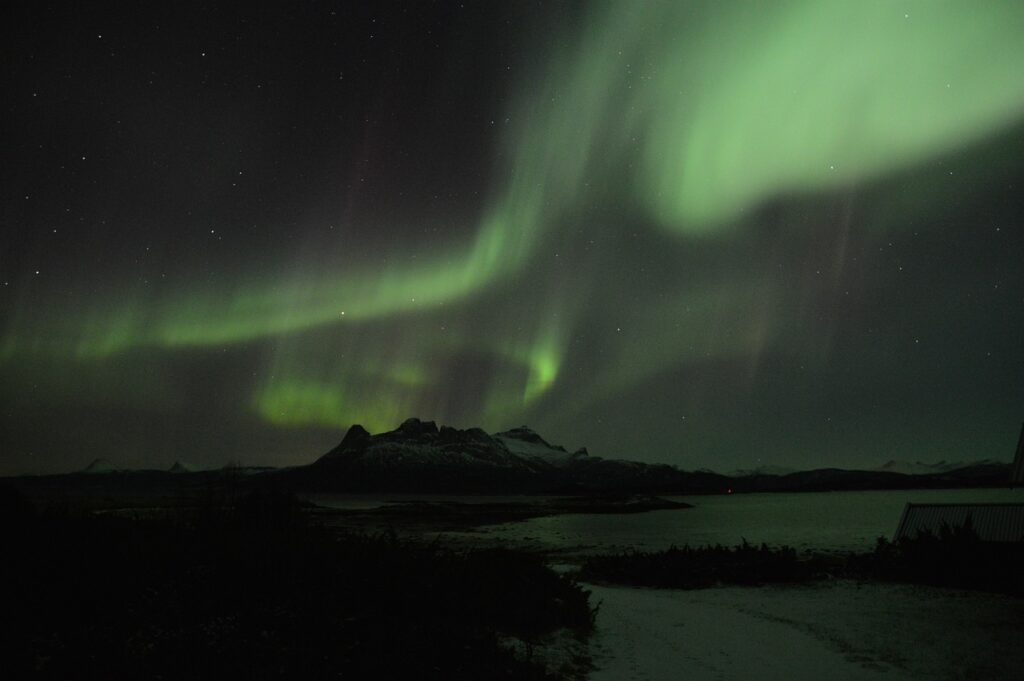
Stop 2: Umeå to Luleå (Approx. 3–4 Hours)
Continue north to Luleå, located just below the Arctic Circle. The landscape becomes more dramatic here with thicker forests, wider rivers, and frozen coastal waters in winter.
Here you will have a high chance to witness the phenomenon, and with the region’s plenty authentic nature accommodations, you don’t even have to leave your doorsteps to see the dancing lights!
Because Luleå sits so far north, your chances of seeing the aurora increase significantly. On clear nights, you may witness green ribbons dancing across the sky directly even from the city.
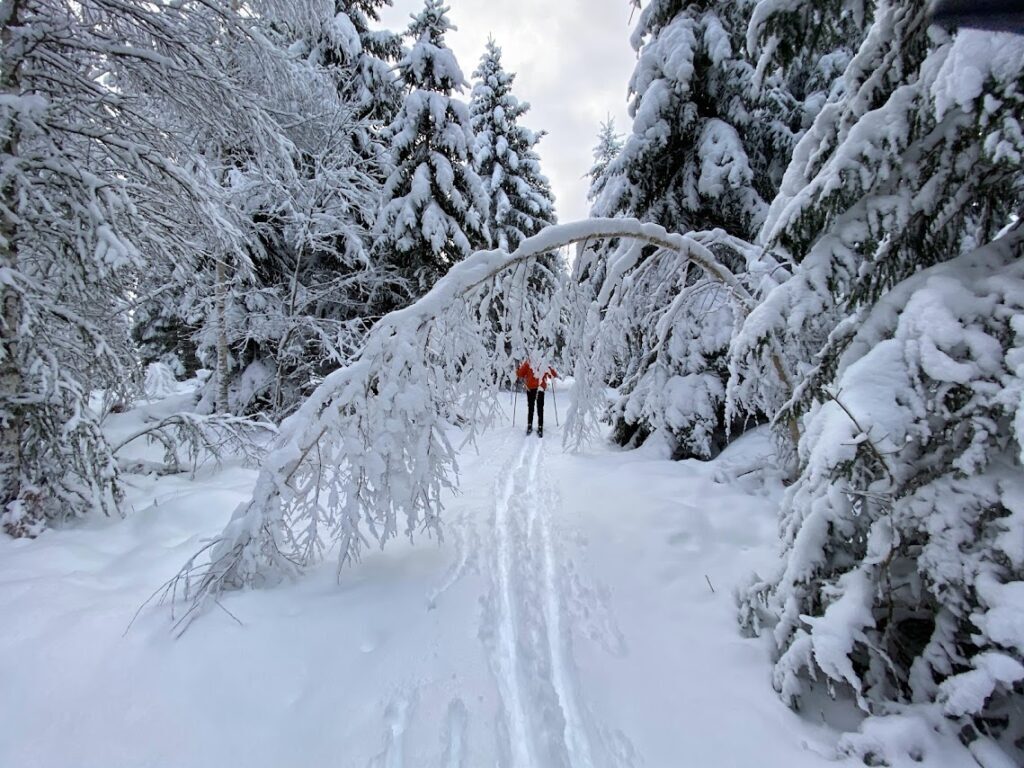
Stop 3: Luleå to Jokkmokk (Approx. 2.5 Hours)
Heading inland toward Jokkmokk, you will enter the cultural heart of Swedish Lapland. This small Arctic town is famous for Sami heritage and its historic significance.
This area offers some of Sweden’s darkest skies due to low population density. Flatlands and wilderness make up most of the region. Therefore, you will find remote forest cabins with wood-burning stoves, easy access to frozen lakes, and absolute silence.
Many local hosts collaborate with Sami guides, offering reindeer experiences and storytelling evenings. Watching the northern lights in Jokkmokk feels genuine and untouched, far from city lights and crowds.
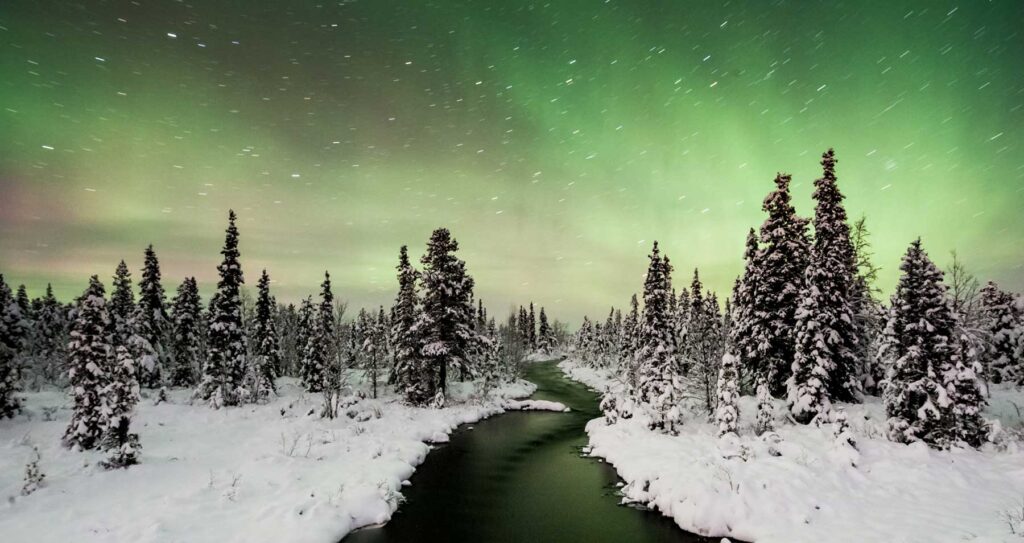
Final Destination: Kiruna (Approx. 2.5–3 Hours)
Your final stop is Kiruna, Sweden’s northernmost city and one of the best aurora destinations in Europe. Located above the Arctic Circle, Kiruna offers exceptional northern lights visibility from October through March.
While in Kiruna, experience some of the more intimate Arctic activities, such as dog sledding, ice karting, snowmobile excursions, and outdoor hot tubs under the stars. Since the region has a dry inland climate, it often has clearer skies than coastal areas, increasing your aurora chances.
Train Alternative
If you prefer not to drive, Sweden’s rail system offers a comfortable alternative. You can take an overnight train from Stockholm to Kiruna, passing through Umeå and Luleå along the way. The journey takes approximately 15–17 hours.
Benefits of the train:
• No winter driving stress
• Sleeper cabins available
• Enjoy scenic snowy landscapes
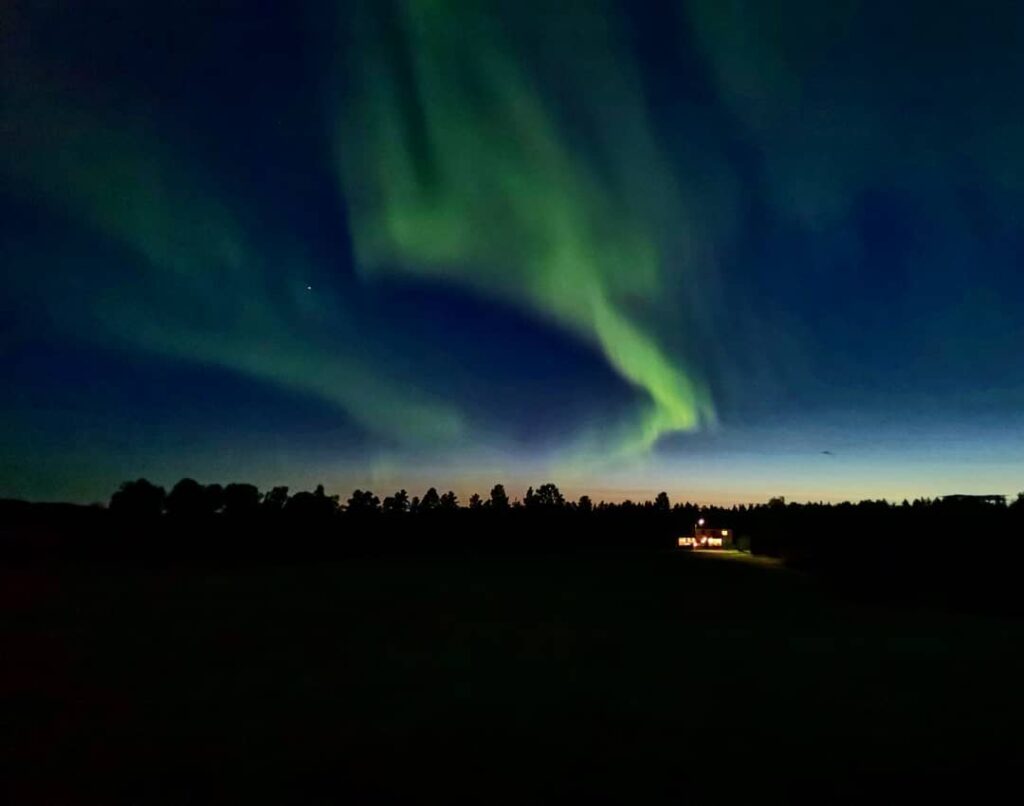
Best Time for a Northern Lights Trip from Stockholm
For optimal aurora viewing:
• September–October: Early season with milder temperatures
• November–March: Peak viewing period with long, dark nights
• January–February: Coldest months, but often clear skies inland
Clear skies are just as important as solar activity. Inland stops like Jokkmokk and Kiruna statistically offer better viewing conditions than coastal areas, such as Umeå and Luleå.
A northern lights trip from Stockholm becomes far more meaningful when you turn it into a countryside journey. Driving north through Umeå, Luleå, Jokkmokk, and Kiruna allows you to experience Sweden’s shifting landscapes, from Baltic coastline to Arctic wilderness.
The aurora may be unpredictable, but one thing is certain, traveling slowly through rural Sweden makes the journey just as magical as the lights themselves.